Diploma in Hotel Management After 12th: Course, Fees, Stipend and International Career Opportunities

Choosing a career after Class 12 can be challenging. Some students prefer traditional academic programmes, while others want to develop practical skills and enter a professional industry sooner. For students who enjoy interacting with people, working in dynamic environments and learning new skills, hospitality can be an interesting career option.
A diploma in hotel management after 12th can introduce students to the day-to-day operations of hotels, resorts, restaurants and other hospitality businesses. The course combines classroom learning with practical activities, helping students understand how different departments work together to deliver a good guest experience.
The hospitality industry also offers career opportunities across different locations and types of businesses. However, choosing the right course requires more than looking at the course name. Students should understand its duration, curriculum, practical training, qualification, internship arrangements and future career options before taking admission.
What Is a Diploma in Hotel Management?
A diploma in hotel management is a career-oriented programme that introduces students to the major operational areas of the hospitality industry. It is designed to help learners understand the responsibilities involved in managing hotel services and guest experiences.
Depending on the programme, students may learn about:
- Food Production: Kitchen operations, cooking methods, food preparation and kitchen hygiene.
- Food and Beverage Service: Restaurant operations, table service, guest interaction and service standards.
- Front Office Operations: Guest check-in and check-out, reservations, reception duties and communication.
- Housekeeping Operations: Room preparation, cleanliness, maintenance coordination and hospitality standards.
- Hospitality Communication: Professional behaviour, teamwork, grooming and guest handling.
- Tourism and Hospitality: An introduction to travel services, tourism operations and the wider hospitality sector.
These subjects provide an understanding of how hotels operate. Practical learning is particularly important because hospitality professionals are expected to apply their knowledge in real workplace situations.
Who Can Apply for a Hotel Management Diploma After 12th?
Students who have completed Class 12 can explore diploma-level hospitality programmes, subject to the eligibility requirements of the institute and the specific qualification.
Students from different academic streams may consider hospitality education. Science, commerce and arts students can all explore suitable programmes, depending on the admission criteria.
Before applying, students should check:
- The minimum educational qualification required.
- The age or other admission conditions, if applicable.
- The course duration and subjects covered.
- Whether practical training is included.
- The nature of the final certificate or diploma.
- Whether the qualification has a recognised awarding body.
- Whether there is an opportunity for further education.
Students should also consider their interests. Someone who enjoys cooking may prefer food production or culinary training, while someone who enjoys guest interaction may be interested in front office or food and beverage service.
What Is the Duration of a Hotel Management Diploma?
The duration depends on the type and level of programme. Some skill-based courses are shorter, while advanced hospitality programmes may run for two years or more and include industrial training.
For example, an advanced diploma may cover basic hospitality operations in the initial stage, followed by more specialised learning and industry exposure.
Students should not compare programmes only by duration. A shorter course is not automatically better, and a longer course does not necessarily guarantee stronger career outcomes. The important question is what the student will learn during that period.
A useful course structure should explain the subjects, practical hours, training arrangements, assessment methods and qualification awarded at the end.
Why Practical Training Matters in Hotel Management
Hospitality is a service-driven industry. Employees interact with guests, handle operational responsibilities and work with different teams throughout their shifts. This makes practical experience an important part of professional preparation.
For example, a student learning food production should have opportunities to understand kitchen equipment, ingredient preparation, cooking techniques, food safety and hygiene. Similarly, a student learning front office operations should become familiar with guest communication, reservation procedures and professional conduct.
When comparing a hotel management course in Delhi, students should look for access to facilities such as:
- Training kitchens and food production laboratories.
- Food and beverage service practice areas.
- Front office training facilities.
- Housekeeping demonstration rooms.
- Computer and communication learning facilities.
- Workshops, demonstrations and industry interactions.
Practical sessions can help students become more comfortable with workplace expectations. They also provide opportunities to identify the departments in which they may want to build a career.
Can Students Earn a Stipend While Learning Hotel Management?
This is an important question for students and parents who want to understand the financial side of professional education.
Some hospitality training and employment pathways may include paid industrial training, internships or stipend-based work opportunities. These arrangements can give students workplace exposure while providing an opportunity to earn.
In certain eligible opportunities, students may come across advertised stipend amounts of up to ₹30,000 per month. However, this should be understood as a possible maximum, not a guaranteed amount for every student or every course.
The actual stipend may depend on several factors:
- The hotel or employer offering the opportunity.
- The student’s eligibility and selection.
- The role and department assigned.
- The training or employment arrangement.
- Working hours, duration and performance requirements.
- The terms mentioned in the written offer.
Students should ask the institute or employer whether the amount is a fixed stipend, a variable payment or an earning figure linked to specific working conditions.
Can a Stipend Help Students Manage Their Course Fees?
A stipend may help students manage some of their education and personal expenses. Depending on the amount received and the duration of the paid opportunity, it may also contribute towards course-related costs.
However, students should calculate the actual financial benefit before assuming that a stipend will cover the entire course fee.
For example, they should compare the total course fee with the expected stipend over the confirmed payment period. They should also check whether accommodation, meals, travel, uniforms, examination charges or other expenses are included.
The best approach is to request written details of the programme, training conditions, stipend amount and payment schedule before admission.
Can a Hotel Management Diploma Lead to an International Career?
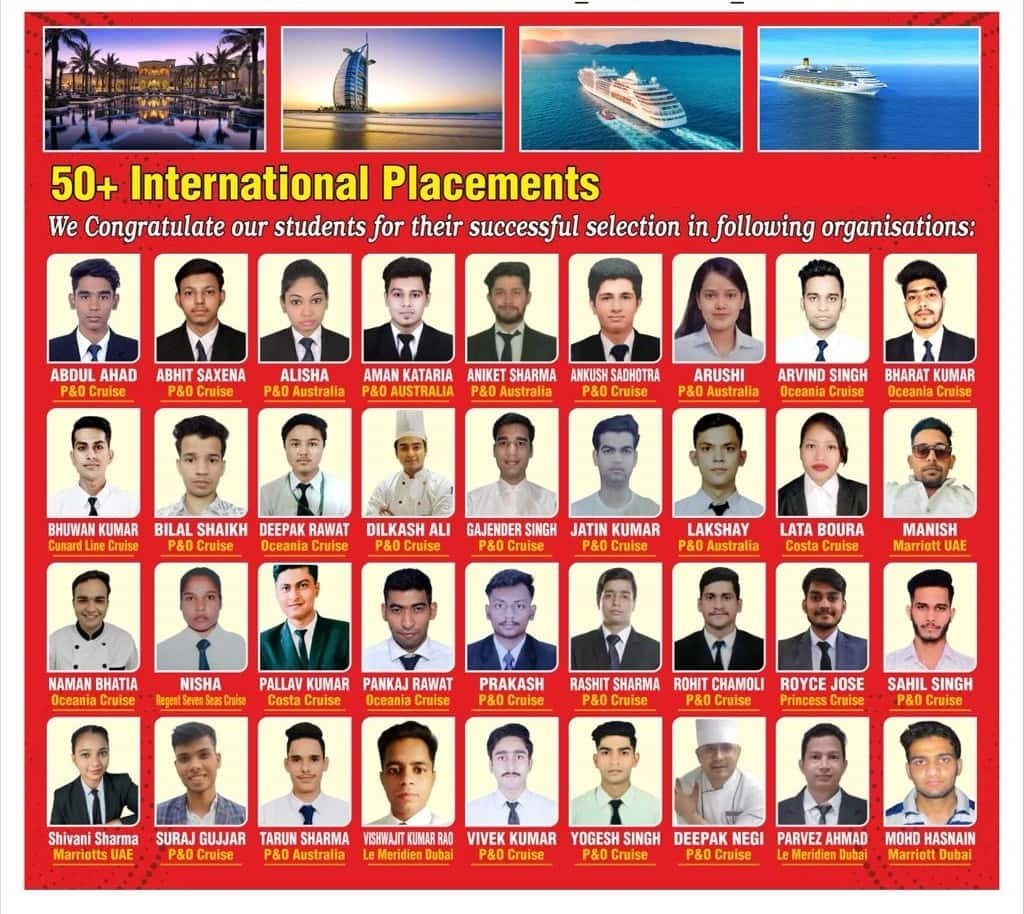
Hospitality is an industry with businesses operating across different countries. Hotels, resorts, restaurants, cruise lines and other tourism-related organisations require professionals who understand guest service and operational standards.
Students with suitable qualifications, practical experience and communication skills may explore opportunities in international hospitality markets.
Some possible career areas include:
- Hotel and resort operations.
- Food production and culinary departments.
- Food and beverage service.
- Housekeeping operations.
- Front office and guest relations.
- Cruise and tourism-related hospitality services.
The exact opportunities depend on the employer, the candidate’s skills, work experience, qualification and the employment rules of the destination country.
Students interested in working abroad should also understand that an overseas job is not determined by a diploma alone. Employers may consider professional experience, English communication, technical skills, interviews, references and the ability to work in a multicultural environment.
Work permits, visas and other immigration requirements must be fulfilled separately.
Is an International Diploma Important for a Hospitality Career?
Students often come across terms such as international diploma, global qualification and industry-recognised certification while researching hospitality courses.
Before choosing a programme, it is important to understand exactly what these terms mean.
Students should check:
- The name of the organisation awarding the qualification.
- Whether the qualification is recognised by the relevant authority.
- The level and framework under which it is awarded.
- Whether the qualification allows progression to another programme.
- Whether employers or educational institutions accept it for the intended purpose.
A qualification should never be selected only because the word “international” appears in its name. Students should verify the awarding body and the actual recognition status.
A well-structured qualification, supported by practical training and relevant work experience, can help students prepare for a professional hospitality career.
How to Choose the Right Hotel Management Institute in Delhi
Delhi NCR has several institutions offering hospitality and hotel management programmes. Students searching for a hotel management institute in Delhi should compare institutes carefully rather than selecting one only because of advertisements or fee offers.
Here are some important factors to consider.
- Course Structure and Eligibility
Check whether the course is suitable for students who have completed Class 12. Understand the subjects, duration, admission requirements and qualification awarded.
- Practical Infrastructure
Visit the campus, if possible. Ask to see the training kitchen, housekeeping facilities, front office practice area and food and beverage service facilities.
- Industry Exposure
Ask whether students receive opportunities for industrial training, internships, industry visits, workshops and guest lectures.
- Qualification and Recognition
Verify the awarding organisation and the recognition applicable to the particular course. Do not assume that all programmes offered by an institute have identical recognition.
- Training and Placement Support
Ask how the institute helps students prepare for employment. Understand whether it provides interview preparation, industry connections, recruitment drives and placement assistance.
Also ask for clarity on the difference between placement assistance and a guaranteed job.
- Total Course Cost
Compare the complete fee structure, including admission charges, examination fees, uniforms, study material, accommodation and other possible expenses.
A transparent fee structure makes it easier for families to plan their investment in education.
Exploring Hospitality Education at The Hotel School, New Delhi
Students researching hospitality programmes in the Delhi NCR region may also explore The Hotel School, located in Kapashera, New Delhi, near IGI Airport and Aerocity.
The institute offers programmes in hospitality operations, hotel management and food production. Its Advanced Diploma in Hospitality Operations is a two-year programme that includes industrial training. The course covers areas such as food production, food and beverage service, front office operations, housekeeping, tourism management and communication skills.
The programme is recognised by the National Council for Vocational Education and Training (NCVET) and awarded by the Tourism and Hospitality Skill Council (THSC), as specified for this qualification.
Students can explore the diploma in hotel management programme at The Hotel School to understand its course structure and eligibility.
The institute also provides information about its hospitality education programmes and campus. Students interested in progressing towards degree-level education can explore the Bachelor of Hotel Management programme and verify the applicable university and admission requirements.
As with any professional course, prospective students should directly confirm current fees, training arrangements, stipend eligibility and qualification details before making an admission decision.
Career Opportunities After a Diploma in Hotel Management
After completing an appropriate hospitality programme and gaining relevant practical experience, students may explore entry-level roles in different departments.
| Department | Possible entry-level roles |
| Food Production | Commis Chef, Kitchen Assistant |
| Food and Beverage Service | Restaurant Associate, F&B Associate |
| Front Office | Front Office Associate, Guest Service Associate |
| Housekeeping | Room Attendant, Housekeeping Associate |
| Guest Relations | Guest Relations Associate |
| Cruise Hospitality | Entry-level food service and hotel operations roles |
The job title and responsibilities depend on the employer, qualification, practical experience and selection process.
With experience, further training and professional development, individuals may work towards supervisory and managerial responsibilities.
Frequently Asked Questions
- Can I do a diploma in hotel management after 12th?
Yes. Students who have completed Class 12 can apply for suitable hotel management diploma programmes.
- Which hotel management course is best after 12th?
The right course depends on the student’s career interests. A student interested in overall hotel operations may consider hospitality operations, while someone interested in cooking may prefer food production or culinary training.
- What is the duration of a diploma in hotel management?
Course duration varies by programme. Some skill-based courses are shorter, while advanced diploma programmes may last two years and include industrial training.
- Can I get a stipend while studying hotel management?
Some training and employment pathways may provide stipends. Students should confirm whether the opportunity is linked to their selected course, the eligibility conditions and the payment terms.
- Can hotel management students receive a stipend of ₹30,000 per month?
Some opportunities may advertise stipends of up to ₹30,000 per month. This is not a guaranteed payment for every student. The actual amount depends on the employer, role, eligibility and written terms.
- Can a stipend cover the entire hotel management course fee?
It may contribute towards education expenses, but full fee recovery should not be assumed. Students should compare the confirmed course fee with the actual stipend, payment duration and other expenses.
- Can I get a job abroad after a hotel management diploma?
International opportunities may be available to candidates with relevant qualifications, practical experience and suitable skills. Overseas employment also depends on employer selection, work permits and visa requirements.
- What skills are important for an international hospitality career?
Communication, customer service, teamwork, professional grooming, adaptability, problem-solving and technical knowledge of the chosen department are important skills.
- How do I choose a hotel management institute in Delhi?
Compare course recognition, practical facilities, training opportunities, faculty, industry exposure, fee transparency and placement support. Verify the details of the specific programme before admission.
- Is hotel management a good career option for students after 12th?
It can be a suitable option for students who enjoy service-oriented work, practical learning, teamwork and interacting with people. As with any career, success depends on interest, training, experience and continued skill development.
Conclusion
A diploma in hotel management can be a starting point for students who want to enter the hospitality industry after Class 12. It offers an opportunity to understand hotel operations, develop practical skills and explore different career departments.
For students interested in earning while learning, stipend-based training opportunities may also be worth exploring, provided the terms are clear and the arrangement is suitable. Those interested in international careers should focus on building professional skills, gaining relevant experience and understanding the qualification and employment requirements of their chosen destination.
The most important decision is to select a course and institute that offer a clear curriculum, meaningful practical exposure and transparent information. Taking time to compare these factors can help students make a more informed choice about their future in hospitality.